
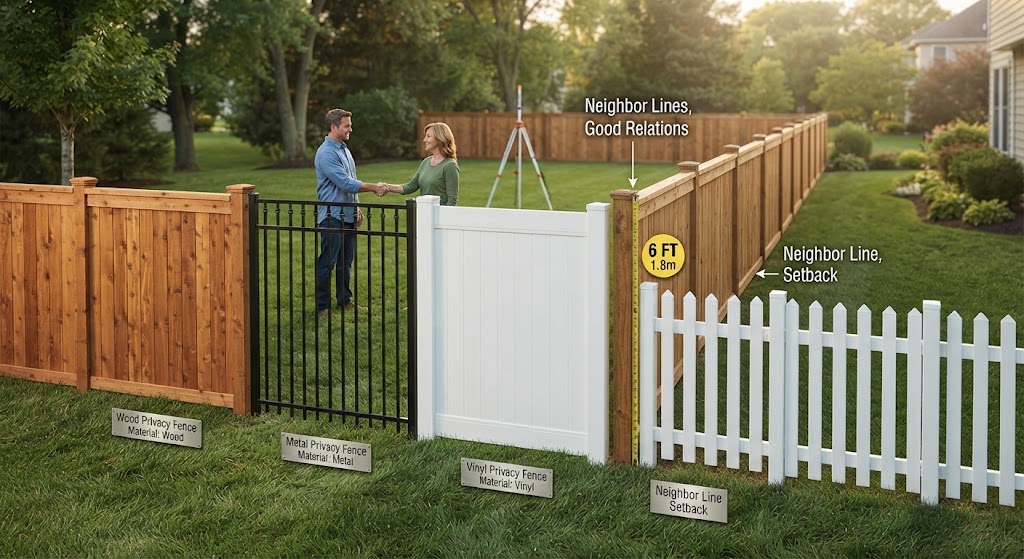
How to Choose the Right Fence for Your Home: Materials, Privacy, and Planning
A fence does more than mark the edge of your property. It can create privacy, improve security, keep pets safely contained, and give your garden a finished appearance. The right design can also complement your home’s architecture and make your outdoor space feel more comfortable and inviting.
Choosing a fence, however, involves more than picking a material or deciding how tall it should be. Property boundaries, local regulations, maintenance requirements, and installation costs all deserve attention before construction begins.
Whether you are replacing an aging fence or planning a new one, these practical considerations will help you make a decision that works for your home and your budget.
Please note: Fence regulations vary by location. Check local requirements for height, placement, permits, easements, and homeowners association (HOA) approval before starting your project.
1. Start by Defining the Purpose of Your Fence
Before comparing materials or browsing designs, decide what you want your fence to accomplish. A fence designed for backyard privacy will have different requirements from one intended to enclose a garden or define a front-yard boundary.
Privacy: If you want to enjoy your patio without feeling exposed to neighboring properties, consider a solid fence with minimal gaps between the panels. Height, panel design, and the position of nearby windows will all influence how much privacy you achieve.
Pet safety: For dogs and other pets, focus on appropriate height, secure gates, and gaps small enough to prevent escape. Consider whether your pet is likely to climb, jump, or dig beneath the fence.
Security: A fence can help discourage unwanted access, although it should be combined with secure gates and other appropriate security measures. The best design depends on your property’s layout and the level of protection you need.
Garden definition: If your primary goal is to frame landscaping or establish a visual boundary, a lower fence, decorative metal design, or living hedge may be sufficient.
Curb appeal: A well-chosen fence can complement your home’s exterior, coordinate with existing landscaping, and create a more cohesive appearance from the street.
Identifying your main priority early will help narrow your options and prevent you from paying for features you do not need.
2. Compare the Most Popular Fence Materials
Fence materials affect appearance, durability, installation costs, and long-term maintenance. Each option has advantages, so consider how it will perform in your climate and how much upkeep you are prepared to handle.
Wood Fencing
Wood remains a popular choice because of its natural appearance and design flexibility. It can be stained, painted, or left to weather, depending on the species and desired finish.
Wood fences are available in many styles, including privacy panels, picket fences, horizontal boards, and decorative designs. This versatility makes wood suitable for both traditional and contemporary homes.
The main consideration is maintenance. Depending on the wood species, finish, and local weather, the fence may need periodic sealing, staining, painting, or repairs. Moisture, insects, and prolonged exposure to the elements can shorten its lifespan if the fence is not properly maintained.
Best for: Homeowners who value a natural appearance and want flexibility in design.
Vinyl Fencing
Vinyl fencing offers a clean, consistent appearance with relatively little routine maintenance. It does not require the regular painting or staining associated with many wood fences, and dirt can often be removed with ordinary cleaning.
Vinyl is available in privacy, picket, and other decorative styles. However, its uniform finish may not suit every architectural style, and quality varies between products.
Temperature changes can affect vinyl, while impact damage may require replacing a section rather than repairing it discreetly. Check the manufacturer’s specifications, warranty, and suitability for your local climate.
Best for: Homeowners who want a tidy appearance and prefer to minimize ongoing maintenance.
Metal Fencing
Metal fencing, including aluminum and steel options, can provide a refined appearance while preserving views across the property. Ornamental metal fences are especially popular around front yards, gardens, and landscaped areas.
Aluminum is generally lightweight and resistant to rust, making it a practical choice for many outdoor settings. Steel offers strength but requires appropriate corrosion protection, particularly in damp or coastal environments.
Because many metal designs have open spaces between their bars, they provide less visual privacy than solid panels. Additional landscaping may be needed if screening is a priority.
Best for: Homeowners who prefer an open appearance, defined boundaries, and a decorative finish.
Composite Fencing
Composite fencing typically combines wood fibers and recycled or virgin plastics to create a material designed to resemble wood while reducing some of its maintenance requirements.
It can be an attractive option for homeowners who like the look of wood but want to avoid frequent painting or staining. Available colors and finishes vary by manufacturer.
Composite fencing can have a higher initial price than some basic wood options. Its weight, expansion characteristics, and installation requirements also differ by product, so check the manufacturer’s guidance before choosing a system.
Best for: Homeowners seeking a wood-inspired appearance with less routine upkeep.
Living Fences and Hedges
A living fence uses shrubs, hedges, or other plants to define a boundary. It can soften the appearance of a yard, support local wildlife, and create a natural transition between outdoor spaces.
However, plants need time to grow, and the amount of privacy they provide changes with the seasons and species. Regular pruning, watering, and occasional replacement may also be necessary.
Consider mature plant size, root growth, sunlight requirements, and local growing conditions before planting along a boundary.
Best for: Homeowners who want a natural look and are willing to maintain a growing landscape feature.
3. Choose the Right Height and Style
Fence height affects privacy, security, appearance, and regulatory compliance. A tall, solid fence may be ideal for a secluded backyard, but it can feel imposing in a small front yard.
Solid panels provide stronger visual screening and can reduce some wind exposure, although they may also create significant wind loads that the posts and foundations must withstand. Open designs allow more air and light to pass through while maintaining a clear boundary.
Lattice-topped fences offer a middle ground, combining a solid lower section with a more open upper portion. Picket and ornamental metal fences can define a property without making the yard feel enclosed.
When choosing a style, consider the architecture of your home, the scale of the yard, and nearby landscaping. A fence that complements the home’s exterior generally looks more intentional than one selected in isolation.
Also check local height restrictions before finalizing your design. Rules may differ between front yards, side yards, and backyards, and corner lots can have additional visibility requirements.
4. Confirm Your Property Boundaries Before Installation
Few fence projects create more frustration than discovering that the new structure crosses a property line.
An existing fence is not necessarily located on the legal boundary. Previous owners may have installed it incorrectly, or the property may have changed over time.
Review your property survey and other relevant documents before deciding where the fence should go. If the boundary is unclear or disputed, consider hiring a licensed land surveyor to establish the line accurately.
You should also check for easements, shared access areas, and other restrictions that may affect where construction is permitted.
Clarifying these details before installation can help prevent disputes, costly relocation, and unnecessary damage to landscaping or other property features.
5. Check for Underground Utilities Before Digging
Fence posts require holes, and underground utilities may run through areas that appear completely clear from the surface.
Before digging, contact the appropriate local utility-locating service. In the United States, homeowners can generally begin through the national 811 system or their state’s designated service. Follow the applicable notice period and wait until the relevant lines have been marked before excavation.
Utility markings may identify gas, electric, water, communications, and other underground infrastructure. Remember that public utility locating services may not identify privately owned lines, such as certain irrigation systems, landscape lighting cables, or private water pipes.
If you are unsure what runs through your yard, investigate before digging. A little preparation can prevent dangerous accidents, expensive repairs, and project delays.
6. Talk to Your Neighbors and Review Local Requirements
A fence can affect the appearance of neighboring properties, so discussing your plans with adjacent homeowners is often worthwhile, particularly when the fence will sit near a shared boundary.
Explain where you intend to install it, describe the proposed style, and discuss any practical concerns about access or maintenance. You may also want to agree on which side will face outward, although local rules or agreements may determine this.
Before construction, check whether your municipality requires a permit or imposes restrictions on fence height, materials, setbacks, or placement. Homeowners associations may have additional requirements regarding colors, styles, and approval procedures.
Do not assume that a fence is exempt from permits simply because it is relatively short. Requirements vary by jurisdiction, and corner lots, historic districts, and properties with easements may be subject to additional rules.
Confirming the requirements before purchasing materials can save both time and money.
7. Think Beyond the Initial Installation Cost
The cheapest fence is not always the most economical choice over time. Compare the full cost of ownership, including installation, maintenance, repairs, and eventual replacement.
Wood may have a lower initial cost in some situations but require periodic finishing. Vinyl can reduce routine maintenance, while composite products may cost more upfront. Metal fencing varies considerably depending on the material, finish, design, and site conditions.
Installation costs also depend on the length of the fence, terrain, soil conditions, gate requirements, removal of an existing structure, and accessibility for equipment.
When comparing contractor quotes, make sure each proposal covers similar materials, fence heights, post spacing, gate hardware, site preparation, cleanup, and warranty terms. A lower quote may not represent the better value if important work has been excluded.
If your budget is limited, consider prioritizing the areas where privacy or security matters most and using a simpler design elsewhere, provided local rules and your intended use allow it.
8. Build for Durability, Not Just Appearance
A fence’s long-term performance depends heavily on its installation. Even high-quality materials can fail prematurely if the posts are poorly supported, drainage is inadequate, or the structure is not suited to local conditions.
Ask your installer how the posts will be set and how the design accounts for soil type, frost depth where relevant, drainage, and wind exposure. The appropriate foundation method depends on the material, site conditions, and local building requirements.
Quality fasteners and suitable corrosion protection are important, particularly in damp environments. Gates deserve special attention because their weight and repeated movement place additional demands on hinges, posts, and latches.
Maintenance should also be part of your plan. Inspect the fence periodically for loose fasteners, damaged panels, leaning posts, deteriorating finishes, and gate problems. Addressing small issues early can prevent more extensive repairs later.
Make Your Fence a Lasting Improvement
The right fence should serve your practical needs while complementing the character of your home. Whether you choose classic wood, low-maintenance vinyl, ornamental metal, composite materials, or a living hedge, the best solution is the one that fits your property and your lifestyle.
Start with a clear purpose, confirm the property boundaries, check local regulations, and compare materials based on both appearance and long-term costs. Then choose an installation approach suited to your soil, climate, and intended use.
A thoughtfully planned fence does not need to draw attention to itself. It simply makes your outdoor space more private, functional, and welcoming for years to come.
Comments
0 commentsNo comments yet. Be the first to share your experience.