
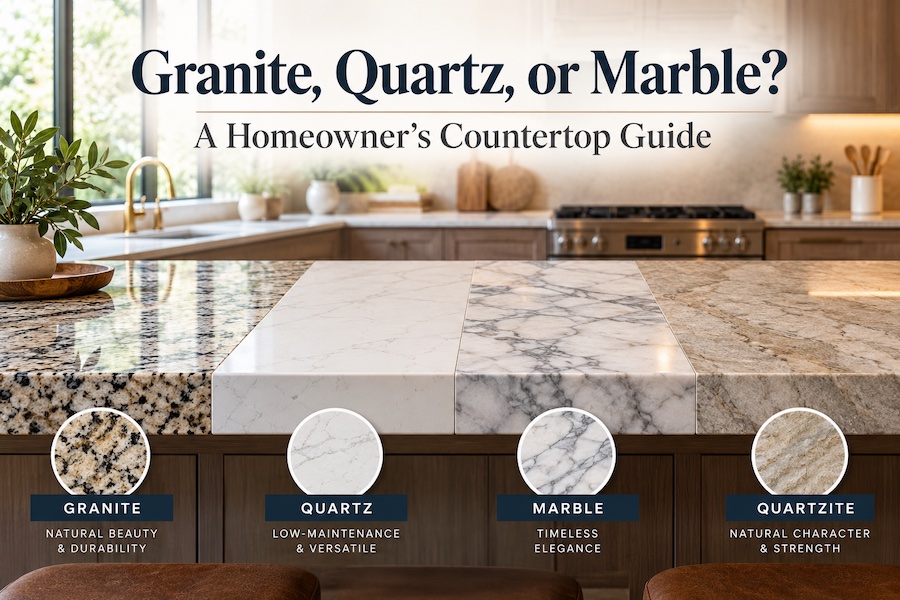
Granite, Quartz, or Marble? How to Choose the Right Countertop for Your Home
Choosing a new countertop is one of the most important decisions you can make when updating your kitchen. The right surface can transform the appearance of your space, improve everyday functionality, and add lasting value to your home. But with so many materials, finishes, and installation options available, knowing where to start can be challenging.
Granite, quartz, marble, and quartzite each offer distinct advantages. The best choice depends on your budget, cooking habits, design preferences, and willingness to perform routine maintenance.
Fortunately, homeowners don’t have to navigate every decision alone. Troy Granite offers professional countertop services, from material selection and fabrication to templating and installation, along with a free AI-powered countertop assistant that helps answer common questions throughout the planning process.
This guide covers the essential factors to consider before investing in new kitchen countertops.
Granite, Quartz, Marble, or Quartzite: Which Material Is Best?
The best countertop material is the one that fits your household’s needs. Before making a decision, consider durability, maintenance, appearance, and long-term costs.
Granite: Natural Beauty and Everyday Durability
Granite remains a popular choice for homeowners who want a durable natural stone with distinctive patterns. Each slab has its own combination of colors, mineral variations, and veining, making every installation unique.
Granite generally offers good resistance to heat and everyday wear. However, its porosity varies, and some varieties benefit from periodic sealing to help reduce staining.
Granite is worth considering if you want a natural surface that combines visual character with practical performance.
Quartz: A Low-Maintenance Surface
Engineered quartz is manufactured primarily from quartz minerals combined with resins and pigments. Unlike most natural stones, it is nonporous and generally does not require sealing.
Its consistent patterns and broad range of colors make quartz particularly appealing in contemporary kitchens. However, some quartz products can be damaged by excessive heat or prolonged exposure to direct sunlight. Using trivets and following the manufacturer’s care instructions can help protect the surface.
Quartz may be a good option for households that prioritize easy cleaning and predictable design.
Marble: Timeless Elegance
Marble is known for its distinctive veining and sophisticated appearance. It is often used in statement kitchens, islands, and interiors where natural variation is an important part of the design.
However, marble is more susceptible to scratching, staining, and acid etching from substances such as lemon juice and vinegar. Homeowners who choose marble should understand that some surface changes are part of the material’s natural aging process.
If appearance is your highest priority and you are comfortable with additional care, marble can be an excellent choice.
Quartzite: The Character of Natural Stone
Quartzite offers dramatic natural patterns and, in many cases, a marble-like appearance with greater hardness. Popular varieties include Taj Mahal, Macaubas, and Ice Flake.
Its performance depends on the specific stone, so homeowners should confirm the material’s characteristics and maintenance requirements before purchasing.
Quartzite can be an attractive alternative for those seeking a distinctive natural stone surface.
Polished, Honed, or Leathered: Choosing the Right Finish
The finish influences how your countertop looks, feels, and performs in everyday use.
- Polished: A glossy surface that enhances color and pattern while providing a classic, reflective appearance.
- Honed: A smooth, matte finish that creates a softer, understated look. Some honed stones may show grease or stains more readily.
- Leathered: A textured finish with subtle depth and a less reflective appearance, often chosen for granite and quartzite.
Your decision should take into account the stone itself, your preferred interior style, and the amount of maintenance you are willing to perform.
Do Granite and Marble Countertops Need Sealing?
Many natural stone countertops benefit from sealing, although the exact requirements depend on the material and its porosity.
A penetrating sealer helps reduce liquid absorption and gives you more time to clean up spills. It does not make a countertop completely stain-proof, nor does it prevent acid etching on marble.
Engineered quartz generally does not require sealing. Soapstone typically does not require a penetrating sealer either.
When comparing countertop options, ask what protection is recommended for your selected material and whether any sealer or warranty is included with the installation.
Troy Granite offers an in-house sealing and warranty service for eligible residential granite, marble, and quartzite countertops. Its stated 20-year sealer and warranty includes three to four coats, depending on the stone, and covers qualifying food and beverage stains subject to the applicable warranty terms. Homeowners should confirm eligibility and coverage details for their specific project.
What Are the Best Countertops for Outdoor Kitchens?
Outdoor countertops must withstand sunlight, moisture, temperature fluctuations, and changing weather conditions.
Granite is often a suitable choice for outdoor kitchens, provided the particular slab and installation are appropriate for the environment. Some resin-filled stones, however, may change in appearance after prolonged sun exposure.
Engineered quartz is generally not recommended for outdoor surfaces exposed to direct sunlight because ultraviolet radiation can cause discoloration in some products.
Marble and soapstone may also work in certain outdoor applications, depending on the climate, finish, and expected maintenance.
Before selecting a surface, discuss the installation environment with your countertop professional. The right material can help your outdoor kitchen maintain its appearance over time.
Undermount, Drop-In, or Farmhouse Sink?
Your sink should be selected before countertop measurements and fabrication begin. Its size and installation style affect the countertop cutout, cabinet configuration, and fabrication process.
Undermount sinks sit beneath the countertop, creating a clean appearance and making it easier to wipe crumbs and water into the basin.
Drop-in sinks rest on top of the countertop, with a visible rim around the opening. They can be practical for certain replacement projects and existing cabinet layouts.
Farmhouse sinks feature a deep basin and an exposed front. Depending on the model, they may require a compatible sink base, cabinet modifications, and additional structural support.
Finalizing your sink selection early helps prevent avoidable fabrication changes, additional costs, and installation delays.
Will Countertop Seams Be Visible?
Seams may be necessary when installing countertops across large kitchens, expansive islands, or layouts that require multiple slabs.
Their visibility depends on the material, color, pattern, lighting, and quality of fabrication. A heavily patterned stone may disguise a seam more effectively than a solid-colored surface.
Troy Granite uses specialized seam-preparation equipment, including the Seam Phantom, to refine the meeting edges and prepare space for epoxy. During installation, a vacuum seam machine helps align the countertop pieces and pull them together.
Although seams cannot always be made completely invisible, careful planning, precise fabrication, and professional installation can produce a tighter and more consistent result.
Before your project begins, ask about seam placement, pattern matching, and the techniques used to achieve a clean finish.
How Much Do Granite, Quartz, and Marble Countertops Cost?
The cost of new countertops depends on more than the material you choose. The size of your kitchen, slab selection, fabrication requirements, and installation details all influence the final price.
Factors that commonly affect countertop estimates include:
- Total countertop square footage and the number of slabs required
- Material type, color, availability, and pattern
- Edge profiles and decorative details
- Sink and cooktop cutouts
- Seam placement and fabrication complexity
- Removal and disposal of existing countertops
- Transportation and installation requirements
Granite is available at a wide range of price points, while quartz pricing varies by brand, color, and product line. Marble and quartzite can range from relatively accessible selections to premium slabs with distinctive patterns.
When comparing estimates, make sure each quote covers the same work. A lower initial price may not include countertop removal, sink cutouts, or other project expenses.
Troy Granite provides free in-home estimates, templating, and countertop installation within a 60-mile radius of its service area. Projects outside that area may be considered on a case-by-case basis. Requesting an estimate is a practical way to understand the options available for your specific kitchen.
How Do You Choose the Right Countertop for Your Lifestyle?
Before making your final decision, ask yourself a few practical questions:
- How frequently do you cook and prepare food at home?
- Do you prefer a natural stone with unique patterns or a more consistent appearance?
- How much time are you willing to spend on maintenance?
- Is resistance to staining a priority?
- What is your overall renovation budget?
- Will the countertop be installed indoors or outdoors?
Granite may suit homeowners who value natural stone and durability. Quartz may appeal to those who want a nonporous, low-maintenance surface. Marble may be the right choice for homeowners who prioritize elegance and accept the additional care it requires.
There is no universal answer. The best countertop is the one that balances your design goals with your household’s practical needs.
Get Countertop Answers Instantly with Troy Granite’s AI Assistant
Researching countertop materials can quickly lead to more questions than answers. Which surface is easiest to maintain? Does your preferred stone need sealing? Which finish works best in a busy kitchen? What should you know before choosing a sink?
To make this process easier, Troy Granite offers a free AI-powered countertop assistant that helps homeowners explore materials, understand installation considerations, and find answers to common countertop questions.
Available around the clock, the assistant provides convenient guidance on topics such as:
- Comparing granite, quartz, marble, and quartzite
- Understanding polished, honed, and leathered finishes
- Learning about sinks, cutouts, and countertop seams
- Exploring maintenance and sealing requirements
- Understanding the factors that influence countertop costs
- Preparing for a kitchen renovation or countertop installation
Rather than searching through multiple pages for basic information, you can ask a question directly and get an immediate starting point for your research.
The assistant is designed to complement professional countertop services, helping you become better informed before discussing materials, measurements, and installation with a specialist. For project-specific pricing, material suitability, or warranty questions, confirm the details with Troy Granite’s team.
From Countertop Research to Professional Installation
Choosing a countertop involves several connected decisions. Material selection, sink dimensions, edge profiles, seam placement, and installation requirements all affect the final result.
Combining reliable information with professional guidance can make the process easier and help you avoid unnecessary surprises.
Troy Granite brings together countertop selection, templating, fabrication, sealing services for eligible materials, and installation. Its free AI countertop assistant provides an additional resource for homeowners who want to explore their options before starting a project.
Ready to plan your kitchen upgrade? Start by comparing your countertop materials, use Troy Granite’s AI assistant to explore your questions, and request an estimate to discuss the possibilities for your home.
Service availability, warranty coverage, and installation eligibility may vary by project and location. Contact Troy Granite to confirm the details for your home.



Comments
0 commentsNo comments yet. Be the first to share your experience.