
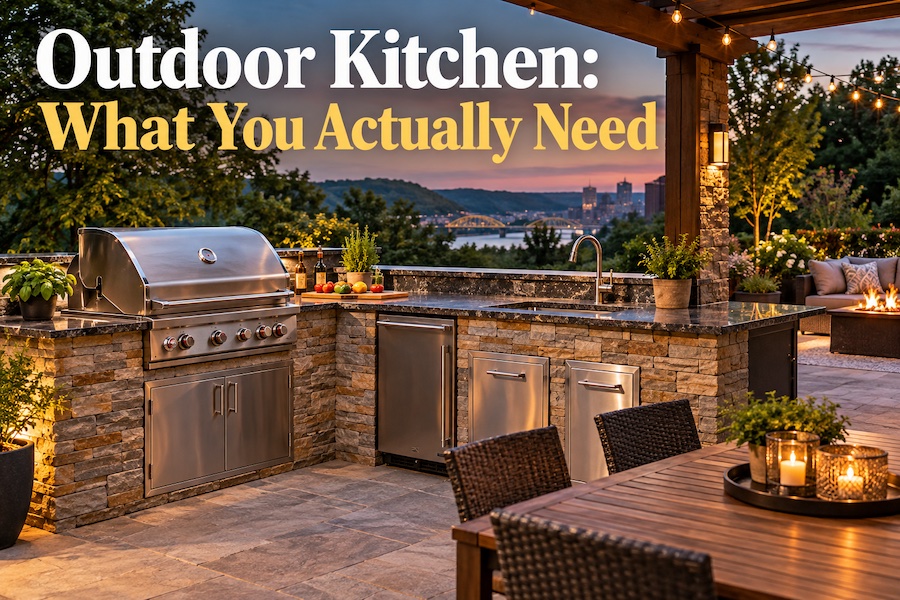
Outdoor Kitchen: What You Actually Need
There’s something special about cooking outdoors. The smell of food on the grill, the fresh air, and friends gathering around the table can turn an ordinary evening into something memorable. A well-designed outdoor kitchen can become one of the most enjoyable features of your home, but only if it fits the way you actually cook, entertain, and spend time outside.
The secret isn’t adding every appliance or building the biggest kitchen your backyard can accommodate. It’s understanding what you need, investing in the essentials, and creating a space that feels natural to use.
Start With a Simple Question
Before choosing appliances, countertops, or cabinetry, think about how you plan to use your outdoor kitchen.
Do you enjoy grilling burgers and steaks on weekends? Do you want to experiment with a pizza oven or a smoker? Or is your main goal to host family gatherings and summer parties without constantly running back and forth to the indoor kitchen?
Each of these uses calls for a different setup. A homeowner who grills occasionally may need little more than a quality grill and a durable work surface. Someone who regularly entertains larger groups might benefit from additional cooking equipment, generous counter space, and a dedicated serving area.
Think about how many people you typically cook for, how often you entertain, and which cooking activities you genuinely enjoy. These answers will help you avoid spending money on features that look impressive but rarely get used.
The Essentials of a Functional Outdoor Kitchen
A practical outdoor kitchen doesn’t have to be complicated. Start with a few essential elements that make cooking, serving, and cleaning easier.
A Grill or Primary Cooking Station
For most outdoor kitchens, the grill is the centerpiece. Choose one based on your cooking habits, available space, and budget. Gas grills offer convenience and quick temperature control, while charcoal grills appeal to those who enjoy a more traditional grilling experience.
If you regularly cook different types of food, you might eventually add a side burner, smoker, or other specialized equipment. However, it’s usually better to begin with one reliable cooking station than to fill the space with appliances you may rarely use.
Durable Countertop Space
Counter space is one of the most important—and frequently underestimated—features of an outdoor kitchen. You’ll need somewhere to season ingredients, prepare vegetables, arrange serving dishes, and set down hot trays or cooking utensils.
Without enough workspace, even a well-equipped kitchen can feel cramped. Plan for a dedicated preparation area beside the grill and, if space allows, another surface for serving food.
Your countertop material matters, too. Outdoor surfaces must withstand temperature changes, moisture, sunlight, and regular use. Choose a material suitable for your local climate and intended application, and make sure the installation accounts for outdoor exposure.
Storage for Tools and Supplies
Grilling tools, cutting boards, serving utensils, seasonings, and cleaning supplies all need a home. Without convenient storage, you’ll find yourself carrying items between the house and the backyard every time you cook.
Weather-resistant outdoor cabinets can keep frequently used supplies organized and close at hand. Choose materials and hardware designed for exterior conditions, particularly if your kitchen will be exposed to rain or humidity.
Lighting That Makes Cooking Easier
Outdoor cooking doesn’t always end when the sun goes down. Proper lighting helps you prepare food safely, monitor the grill, and keep the surrounding area comfortable for guests.
Task lighting above the cooking and preparation areas is especially useful. Softer ambient lighting around seating and dining spaces creates a more relaxed atmosphere once dinner is ready.
Which Extras Are Worth Adding?
Once you’ve covered the essentials, consider which additional features would genuinely improve your outdoor cooking experience.
-
A sink: Makes it easier to rinse produce, wash hands, and handle small cleanup tasks without returning indoors.
-
A compact refrigerator: Keeps drinks and frequently used ingredients nearby, reducing trips inside during gatherings.
-
A pizza oven or smoker: Adds new cooking possibilities if you enjoy making homemade pizza, slow-cooking meats, or experimenting with different flavors.
-
A bar or serving counter: Creates a natural place for guests to gather while you prepare food.
-
Comfortable seating: Encourages people to stay outside and enjoy the space before, during, and after meals.
-
A fire pit: Extends the evening beyond dinner, providing a comfortable gathering spot on cooler nights.
Not every outdoor kitchen needs all these features. A refrigerator may be worthwhile for someone who entertains frequently, while a pizza oven may be a better investment for a household that makes pizza every weekend. Let your habits guide your choices rather than treating every upgrade as a necessity.
Design the Space Around the Experience
An outdoor kitchen is more than a collection of appliances and countertops. It’s a place where cooking and socializing happen together.
Consider the relationship between the cooking area, dining table, and seating. Ideally, the person preparing the food should be able to talk to guests without turning their back on the entire gathering. At the same time, keep enough room around the grill to work comfortably and safely.
Think about traffic flow, too. Guests should be able to reach the seating area without walking through the cooking zone, and people serving food shouldn’t have to navigate around chairs or other obstacles.
Shade can make a substantial difference during hot afternoons. A pergola, covered patio, or strategically placed umbrella can help create a more comfortable environment. If your yard has an attractive garden, pool, or landscape feature, arrange the kitchen and seating to take advantage of the view.
The goal is to create a space that feels inviting rather than simply functional.
Choose Materials That Can Handle the Outdoors
Outdoor kitchens face conditions that indoor kitchens rarely encounter. Rain, humidity, direct sunlight, temperature fluctuations, and seasonal weather can all affect the durability and appearance of your materials.
Cabinetry, countertops, flooring, and fixtures should be selected with these conditions in mind. Materials that perform well indoors may require additional protection or may not be suitable for an exposed outdoor installation.
For countertops, consider not only appearance but also resistance to moisture, heat, staining, and ultraviolet exposure. Natural stone, porcelain, and other outdoor-rated surfaces may be suitable options, depending on the specific product and installation requirements.
Pay attention to the details that are easy to overlook: drainage, weather-resistant hardware, protected electrical connections, and appropriate ventilation. Appliances should be rated for outdoor use, and grills should be positioned according to the manufacturer’s clearance and safety requirements.
A roof or pergola can provide valuable protection, but it doesn’t eliminate the need for weather-appropriate materials. Protective covers and regular maintenance can also help preserve your investment.
Keep the Outdoor Kitchen Connected to Your Home
Convenience is one of the biggest factors that determines whether an outdoor kitchen gets used regularly. If it’s too far from the indoor kitchen, carrying ingredients, dishes, and supplies back and forth can quickly become frustrating.
Whenever possible, position the outdoor kitchen near an accessible entrance to the house. A direct path with a stable, nonslip surface and adequate lighting makes moving between the two spaces easier, especially when carrying food or serving dishes.
Also consider where utilities will be needed. Water lines, drainage, electrical connections, and gas supplies can influence both the layout and the total installation cost. Planning these requirements early can help you avoid expensive changes later.
Before construction begins, check applicable building codes, permit requirements, and local safety regulations. Professional installation may be necessary for gas, electrical, and plumbing work.
Start Small and Expand Over Time
It’s tempting to design the complete outdoor kitchen from the beginning, especially when browsing inspiration photos filled with built-in grills, stone islands, refrigerators, and elaborate entertainment areas. But a large investment isn’t always necessary to create a space you’ll love.
A quality grill, a sturdy outdoor table, adequate preparation space, and comfortable seating can provide everything many households need. After a season of use, you’ll have a better understanding of what is missing and which additions would make the biggest difference.
Perhaps you’ll discover that a sink would save time, or that a covered preparation area would make cooking more enjoyable. You might realize that a pizza oven would be used constantly—or that your original setup is already enough.
Building in stages lets you make decisions based on experience rather than assumptions. It can also help spread the cost over time without sacrificing functionality in the meantime.
Build the Outdoor Kitchen You’ll Actually Use
The best outdoor kitchen isn’t necessarily the largest, most expensive, or most impressive one. It’s the space that fits your lifestyle, makes cooking easier, and gives people a reason to gather.
Start with the essentials, choose durable materials, plan the layout carefully, and add features that support the way you enjoy spending time outdoors. Whether your ideal setup is a simple grilling station or a fully equipped entertainment area, thoughtful planning will help you get more value from your investment.
Ultimately, an outdoor kitchen should make it easier to invite people over, prepare good food, and enjoy time together. If it does that well, you’ve built exactly what you need.



Comments
0 commentsNo comments yet. Be the first to share your experience.