
Kitchen Pantry Ideas: 5 Types to Consider for Your Home
The pantry is where a kitchen keeps its everyday essentials: snacks, spices, flour, canned goods, pasta, and all the ingredients that make cooking possible. When it is well designed, finding what you need becomes easier, grocery shopping becomes more organized, and the kitchen feels less cluttered.
But not every home needs a dedicated pantry room. Depending on your available space, storage needs, and kitchen layout, a tall cabinet, pull-out unit, or even a few well-organized drawers may be a better solution.
Here are five kitchen pantry options to consider before planning your next renovation.
1. The Walk-In Pantry
A walk-in pantry offers dedicated storage in a separate room or enclosed area. With shelves along the walls and enough space to move around comfortably, it can accommodate everything from bulk groceries to small kitchen appliances.
Some walk-in pantries also include a countertop for a coffee maker, toaster, or other appliances that take up valuable space on the main kitchen counters. With thoughtful planning, the pantry can become an extension of the kitchen rather than simply a place to store food.
Best for: Homes with sufficient floor space, families who buy groceries in bulk, and homeowners who want to keep the main kitchen organized.
What to consider: A walk-in pantry requires space that could otherwise be used for cabinets, counters, or other purposes. Deep shelves can also make items difficult to find, particularly when products are pushed toward the back. Adjustable shelving, good lighting, and clearly defined storage zones help prevent this problem.
2. The Tall Pantry Cabinet
A tall pantry cabinet provides substantial storage without requiring a separate room. It can be built into a kitchen’s cabinetry or installed as a freestanding unit, depending on the design and available space.
Behind its doors, multiple shelves can accommodate dry goods, packaged foods, jars, and other essentials. When the cabinet matches the surrounding kitchen cabinets, it creates a seamless appearance that keeps the room looking tidy.
Best for: Small and medium-sized kitchens, homeowners who prefer concealed storage, and renovations where adding a separate pantry is impractical.
What to consider: Deep shelves can make smaller items difficult to reach, while fixed shelves may limit flexibility. Pull-out baskets, adjustable shelves, and tiered organizers can make the cabinet more functional. Before installation, consider whether the doors will open comfortably without interfering with nearby appliances or walkways.
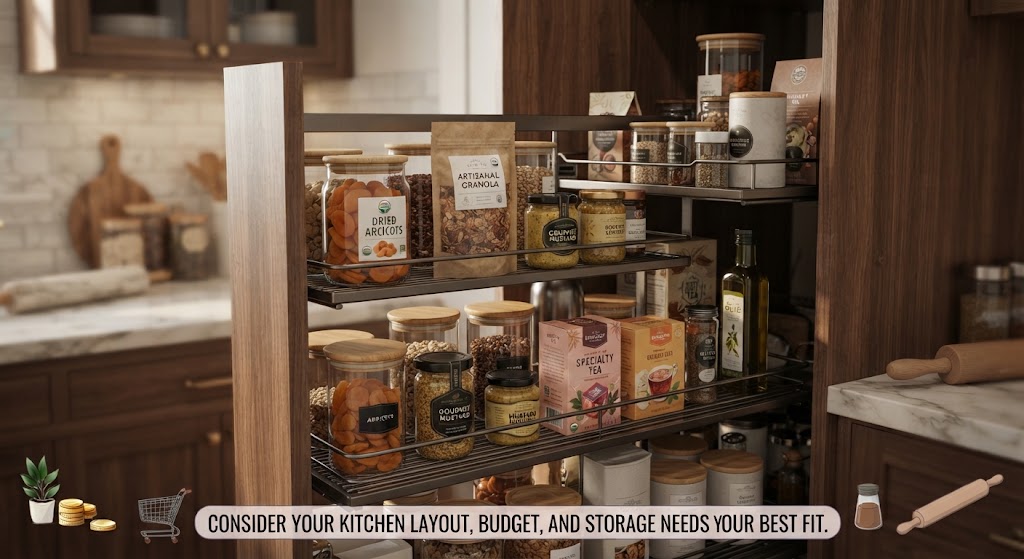
3. The Pull-Out Pantry
A pull-out pantry makes efficient use of narrow spaces that might otherwise go unused. The unit slides out from a cabinet opening, allowing you to access items stored along its sides.
Depending on its design, a pull-out pantry may include multiple narrow shelves or baskets for spices, jars, cans, and frequently used ingredients. Because the contents move into view, it can be easier to find what you need without reaching into a deep cabinet.
Best for: Compact kitchens, narrow gaps between cabinets, and homeowners who want convenient access to everyday ingredients.
What to consider: Pull-out units generally offer less capacity than a walk-in pantry or a large cabinet. Their usefulness also depends on the quality of the hardware and the weight the system can safely support. Reserve them for items that fit comfortably and avoid overloading the shelves.
4. Pantry Drawers and Door Storage
Not every pantry needs to be a tall cabinet. Deep drawers can provide surprisingly effective food storage, particularly for canned goods, packaged snacks, baking ingredients, and other items that are difficult to organize on traditional shelves.
Drawers allow you to see more of their contents from above and bring stored items forward instead of forcing you to reach into the back of a cabinet. Dividers and adjustable organizers can help keep everything in its place.
The back of a pantry or cabinet door offers another opportunity. Properly fitted racks can hold spices, small jars, or lightweight packaged goods, making use of space that would otherwise remain empty.
Best for: Homeowners who want to improve existing storage without adding a dedicated pantry unit.
What to consider: Check the available depth and weight limits before adding organizers. Door-mounted racks need enough clearance to close properly, and heavy items should not be placed on hardware that is not designed to support them.
5. The Pantry Hutch or Open Cabinet
For homeowners who prefer a furniture-inspired kitchen, a pantry hutch or open cabinet can provide practical storage with a more decorative appearance.
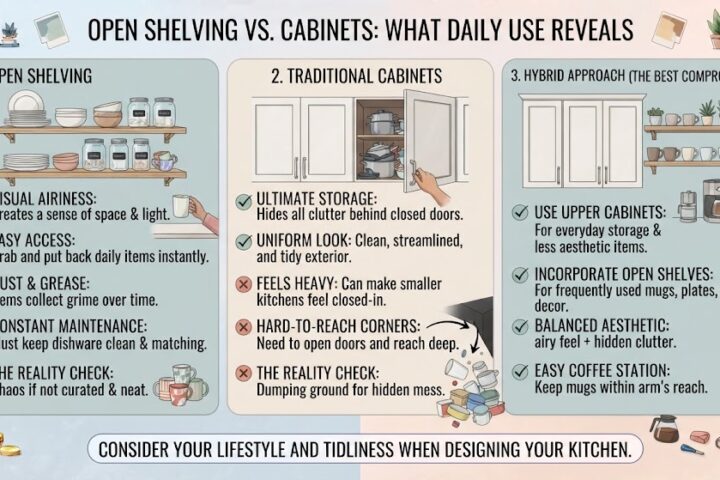
A hutch may combine enclosed cabinets below with open shelves or glass-front doors above. This arrangement allows everyday dishes, jars, cookbooks, and attractive containers to remain accessible while less decorative items stay hidden.
Open pantry shelving can also work well in a breakfast nook or a dedicated coffee corner, where frequently used ingredients and supplies are easy to reach.
Best for: Kitchens with a traditional, farmhouse, or eclectic style, as well as homeowners who want storage that doubles as a design feature.
What to consider: Open storage requires more attention to organization and cleaning. Dust and cooking residue can accumulate on exposed items, so consider the location carefully. Use closed cabinets for products you prefer to keep out of sight.
How to Keep Your Pantry Organized
Regardless of which pantry style you choose, a few simple habits can make it easier to maintain.
-
Keep frequently used items within reach. Store everyday ingredients at a convenient height and reserve higher shelves for products you use less often.
-
Group similar products together. Create separate areas for baking supplies, breakfast foods, snacks, canned goods, and cooking essentials.
-
Use containers where they help. Clear containers can make dry goods easier to identify, but you do not need to transfer every product out of its original packaging.
-
Label shared storage. Labels help household members return items to the right place and make it easier to identify ingredients.
-
Improve the lighting. Good lighting makes shelves easier to navigate and helps prevent forgotten items from accumulating in dark corners.
-
Review your supplies regularly. Move older products to the front, check expiration dates, and remove items you no longer need.
The goal is not to create a pantry that looks perfect every day. It is to create a system that makes cooking, shopping, and everyday kitchen routines easier.
Which Pantry Style Is Right for Your Kitchen?
The best pantry depends on the amount of space you have and how you use it. A walk-in pantry offers generous capacity, while a tall cabinet provides substantial storage in a smaller footprint. Pull-out units make narrow spaces useful, drawers improve access, and hutches can combine storage with decorative appeal.
Before choosing a design, consider what you need to store, how often you cook, and which items you want close at hand. Think about your existing cabinets and whether a few practical adjustments could solve your storage problems without requiring a major renovation.
A well-designed pantry should make your kitchen more functional, not simply give you another space to organize. Choose an option that fits your home and your routine, and everyday cooking can become a little simpler.
Comments
0 commentsNo comments yet. Be the first to share your experience.