

Open Shelving vs. Kitchen Cabinets: Which Is Right for Your Home?
Scroll through a kitchen design magazine or browse your favorite home interiors online, and you will likely find rows of carefully arranged bowls, elegant glassware, and neatly stacked plates displayed on open shelves. The look is inviting, effortless, and full of personality. Then you look at your own kitchen and remember the mismatched mugs, half-empty jars, and everyday clutter that rarely make it into photographs.
Choosing between open shelving and traditional cabinets is about more than appearance. It is a decision that affects storage, cleaning, organization, and the way your kitchen feels every day. The best choice depends on your habits, your available space, and how much maintenance you are willing to take on.
The Appeal of Open Kitchen Shelving
Open shelves can make a kitchen feel lighter and more spacious. Without solid cabinet doors filling the walls, the room often appears less crowded, particularly in smaller kitchens where every visual detail matters.
They also provide an opportunity to introduce personality into your design. A collection of ceramic bowls, a few favorite cookbooks, glass jars, or a small plant can turn an ordinary wall into an attractive feature. Because everything remains visible, you can change the arrangement whenever you want to refresh the room.
Open shelving can also make frequently used items easier to reach. Everyday plates, drinking glasses, and coffee cups are available without opening a cabinet door, which can be convenient during busy mornings.
From a renovation perspective, simple shelving may cost less than installing an equivalent run of upper cabinets. However, the final price depends on the materials, brackets, wall construction, and installation requirements.
The Downsides of Open Shelves
The same openness that makes shelving attractive also creates its biggest challenge: everything is on display.
Dust can settle on dishes, while grease and cooking residue may accumulate more quickly on shelves close to the stove. Items that are rarely used may need cleaning before you reach for them. The amount of maintenance depends on your cooking habits, ventilation, and the location of the shelves.
Organization is another consideration. Open shelving works best when the items on display create a reasonably consistent look. You do not need matching dinnerware or an expensive collection of ceramics, but an assortment of everyday objects can make the kitchen feel visually busy.
There is also less room to hide clutter. When the day gets hectic, closed cabinets offer a quick way to put things away. Open shelves require a little more attention to arrangement and presentation.
Before choosing this style, consider whether you genuinely enjoy keeping things organized or whether you would rather have storage that conceals the mess of everyday life.
Why Traditional Kitchen Cabinets Remain Popular
Closed cabinets are practical for a reason. They conceal visual clutter, protect stored items from much of the dust and grease in the kitchen, and help the room maintain a clean appearance even when life gets busy.
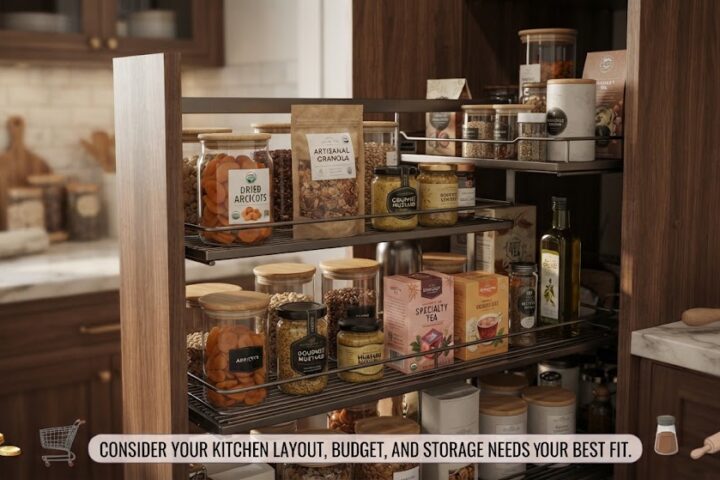
They also make efficient use of wall space. Shelves inside cabinets can be adjusted, organizers can be added, and less attractive essentials can be stored out of sight. For households with limited storage, this flexibility can be especially valuable.
Cabinets are far from a purely functional choice, too. Their appearance can define the entire kitchen. Painted finishes create a classic or contemporary look, natural wood adds warmth, and glass-front doors introduce a lighter, more decorative effect. Textured finishes and distinctive hardware can add character without sacrificing storage.
Closed cabinets do not eliminate cleaning altogether. Their doors and handles still collect fingerprints and cooking residue, and the interiors need occasional attention. However, they generally require less day-to-day styling than open shelves.
A Combination of Open Shelves and Cabinets
You do not have to choose one approach for the entire kitchen. In fact, combining open shelving with closed cabinets often provides the most practical balance.
Consider installing a short section of open shelves beside a window, above a coffee station, or on a wall where you want to create a decorative focal point. Use the shelves for items you reach for regularly or genuinely enjoy displaying.
Keep closed cabinets in the areas where storage matters most. They can accommodate cookware, food containers, small appliances, cleaning supplies, and the everyday items that do not need to be visible.
Glass-front cabinets offer another compromise. They create a sense of openness while providing some protection from dust and grease. Depending on the design, they can also help a kitchen feel less visually heavy than a continuous wall of solid cabinet doors.
The key is to give every storage feature a purpose. Open shelves should add convenience or character, while closed cabinets handle the practical work of keeping the kitchen organized.
How to Choose the Right Option for Your Lifestyle
Before making a decision, ask yourself a few practical questions.
Do you enjoy arranging and displaying objects? If you like styling shelves and keeping your favorite items organized, open shelving may be a natural fit. If you prefer to put things away and move on with your day, cabinets may suit you better.
Are your everyday dishes suitable for display? They do not need to be expensive or perfectly coordinated. What matters is whether you like the way they look together and whether you are comfortable keeping them visible.
How much storage does your kitchen need? If your cabinets are already full, replacing upper cabinets with open shelves could leave you with less usable storage. Consider where cookware, pantry items, and small appliances will go before removing existing cabinetry.
How much cooking do you do? Frequent frying and high-heat cooking can increase grease buildup, especially on shelves near the cooking area. If you cook often, location and ventilation deserve particular attention.
What happens at the end of a busy day? Imagine returning home, preparing dinner, and cleaning up afterward. Will open shelves make your routine easier, or will they create another task?
These everyday considerations are more useful than choosing a design simply because it looks attractive in a photograph.
Make the Choice That Works Beyond the Photograph
Open shelving can bring warmth, character, and a sense of openness to a kitchen. Traditional cabinets offer concealed storage, visual calm, and practical flexibility. A combination of both can provide the advantages of each without requiring you to compromise too much.
Think about how your kitchen functions on an ordinary weekday, not just how it might look after a renovation. The right design should accommodate your cooking habits, available storage, and tolerance for maintenance.
Ultimately, the best kitchen is not necessarily the one with the most beautiful shelves or the most elaborate cabinetry. It is the one that feels welcoming, works efficiently, and continues to suit your life long after the renovation is complete.
Comments
0 commentsNo comments yet. Be the first to share your experience.