

How to Mix Metal Finishes in Your Home: A Guide to Creating a Cohesive Look
For years, interior design followed an unwritten rule: every faucet, cabinet handle, light fixture, and door knob had to share the same metal finish. Brass belonged with brass, chrome with chrome, and mixing the two was often considered a design mistake.
Today, that approach has changed. Combining different metal finishes is a popular way to introduce contrast, warmth, and personality into a home. When done thoughtfully, mixed metals can make a kitchen feel more layered, give a bathroom a more sophisticated look, or add character to a living space.
The secret isn’t matching everything perfectly. It’s choosing finishes that complement one another and repeating them in ways that make the overall design feel intentional.
Whether you’re updating a kitchen, remodeling a bathroom, or refreshing a few rooms, here’s how to mix metal finishes with confidence.
Get to Know the Most Common Metal Finishes
Before combining different metals, it helps to understand the character each finish brings to a room. Color, reflectivity, and texture all influence how a metal looks alongside other materials.
Brass: Warm and Inviting
Brass introduces golden tones that can make a room feel warmer and more welcoming. Depending on the finish, it can look traditional, contemporary, or somewhere in between.
Brushed and satin brass tend to have a softer appearance, while polished brass creates a brighter, more reflective effect. Unlacquered brass can also develop a natural patina over time, giving it a more aged character.
Brass works particularly well with warm wood tones, cream cabinetry, natural stone, and deep colors such as forest green or navy.
Matte Black: Bold and Contemporary
Matte black creates a strong visual contrast against light walls, pale countertops, and white cabinetry. Its understated surface can give a room a modern, architectural quality without adding shine.
Black is also a useful connecting finish because it can work with both warm and cool metals. Black cabinet pulls, for example, can provide a visual link between brass lighting and stainless steel appliances.
Use it strategically, however. Too many dark elements in a small or poorly lit room may make the overall design feel heavier than intended.
Brushed Nickel: Subtle and Versatile
Brushed nickel has a soft silver appearance that works well in traditional, transitional, and contemporary interiors. Its muted finish generally shows fewer fingerprints and water spots than highly polished alternatives, although maintenance depends on the product and its coating.
It pairs comfortably with white cabinetry, gray surfaces, natural wood, and a wide range of paint colors.
Because brushed nickel is relatively understated, it can balance warmer finishes without competing for attention.
Chrome: Bright and Reflective
Chrome offers a clean, mirror-like surface that reflects light and creates a crisp appearance. It is commonly found in bathroom faucets, shower fittings, and contemporary kitchen fixtures.
Its high reflectivity makes it visually different from brushed nickel, even though both have silver tones. That distinction can be useful when you want a mix of finishes rather than several metals that look almost identical.
Chrome pairs well with black, brass, and other finishes when the surrounding materials help connect the different elements.
Choose One Dominant Finish
One of the easiest ways to mix metals successfully is to establish a primary finish before introducing anything else.
Your dominant finish should appear in the most visually prominent or frequently repeated elements of the room. Secondary finishes can then provide contrast and detail.
For example, a kitchen might feature brushed brass cabinet hardware and pendant lights, with matte black accents on selected fixtures. Alternatively, chrome plumbing fixtures could serve as the foundation, while brass lighting adds warmth.
There is no universal percentage that every room must follow. The important thing is to create a clear visual hierarchy rather than giving every finish equal prominence.
If you’re uncertain where to begin, look at the elements that are already in place. An existing faucet, appliance finish, or prominent light fixture may provide a natural starting point for the rest of the design.
Repeat Each Finish to Create a Sense of Purpose
A combination of metals can look accidental when each finish appears only once. Repetition helps the eye recognize a pattern and understand that the differences are part of the design.
Imagine a bathroom with a brass mirror frame, black cabinet pulls, and chrome faucets. The combination may work, but it can feel disconnected if none of the finishes appears elsewhere.
You could create more cohesion by repeating black in a light fixture or accessory and introducing brass through a small decorative detail. The goal isn’t to use every metal equally, but to establish visual connections throughout the room.
Repetition can be subtle. A metal finish might appear in a picture frame, a lamp base, a cabinet handle, or a decorative accessory.
At the same time, avoid forcing a finish into every available space simply to meet a formula. A few well-placed repetitions are usually more effective than an excessive number of matching details.
Balance Warm and Cool Tones
Metal finishes often have warm or cool undertones, and understanding this distinction can help you create a more harmonious combination.
Brass and many bronze finishes introduce warmth. Chrome and brushed nickel generally read as cooler, silvery tones. Matte black is more neutral and can help connect contrasting finishes.
A warm-and-cool combination can create depth because the metals perform different visual roles. Brass might soften a contemporary kitchen, while black hardware adds definition. In another room, cool silver fixtures could balance warm wood cabinetry and golden lighting.
You don’t have to restrict yourself to one temperature. Instead, look at the overall palette of the room.
Warm wood, cream walls, and beige stone may work naturally with brass and bronze. Cool gray surfaces and crisp white cabinetry may suit chrome or nickel, although a touch of brass can prevent the space from feeling too cold.
The relationship between the finishes matters more than following a rigid rule about which metals are allowed together.
How to Mix Metals in Different Rooms
Each room presents different opportunities for combining finishes. The best approach depends on which elements are permanent, which are prominent, and how the space is used.
The Kitchen
Kitchens are particularly well suited to mixed metals because they contain several different fixtures and hardware elements.
You might pair brass cabinet pulls with a black faucet, or use brushed nickel hardware alongside brass pendant lights. Stainless steel appliances can also coexist with these finishes without requiring every other metal in the room to match.
Before choosing your combination, consider the countertops, cabinetry, backsplash, and lighting. These elements create the visual background against which the metals will appear.
If the kitchen already has prominent stainless steel appliances, you don’t necessarily need to hide or replace them. Treat them as part of the existing palette and select complementary finishes for the remaining fixtures.
For a cohesive result, avoid introducing too many competing finishes in a small kitchen. Two main finishes and an existing appliance finish may be sufficient to create contrast without visual clutter.
The Bathroom
Bathrooms often contain several metal elements in close proximity, making coordination especially important.
Faucets, shower fittings, towel bars, cabinet hardware, mirror frames, and light fixtures can all contribute to the overall look.
One option is to keep the plumbing fixtures consistent while introducing a contrasting finish through lighting, cabinet pulls, or the mirror frame. For example, chrome faucets can work alongside brass lighting and a black-framed mirror.
Another approach is to use black for the main fixtures and brass for smaller decorative details.
Whichever combination you choose, pay attention to the finishes that are most difficult to change. Replacing a mirror or cabinet handle is generally easier than replacing an entire shower system, so start with the larger commitment and build around it.
Living Rooms and Bedrooms
In living areas, mixing metals can be more relaxed because decorative elements are often easier to update.
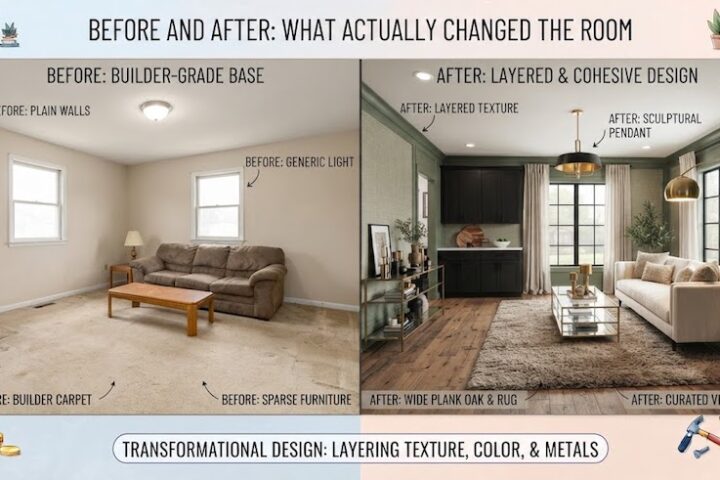
A brass floor lamp, a black coffee table frame, and silver picture frames can coexist comfortably when the furniture, fabrics, and colors connect the overall composition.
Metal finishes can also help link different furniture styles. A contemporary black light fixture might complement a traditional wooden table, while brass accents introduce warmth elsewhere in the room.
Consider the other materials in the space, including upholstery, rugs, artwork, and wood finishes. These elements can help bridge the visual gap between different metals.
Because decorative accessories are relatively easy to change, living rooms and bedrooms are good places to experiment before committing to a mixed-metal scheme in a major renovation.
Practical Tips for a More Cohesive Result
A few simple habits can help you avoid common mistakes when selecting metal finishes.
Start with what you already have. Existing appliances, plumbing fixtures, and architectural details may be expensive or impractical to replace. Build your palette around them where possible.
Compare finishes in person. Product photographs can be misleading because lighting, screens, and photography affect how colors appear. Bring samples together whenever possible.
Pay attention to the type of finish. Polished brass and brushed brass have different visual qualities, just as chrome and brushed nickel do. The amount of shine and the surface texture can be as important as the underlying color.
Consider maintenance. Some finishes show fingerprints, water spots, or scratches more readily than others. Choose products that suit your household’s cleaning habits and expectations.
Use materials to connect different metals. Wood, stone, glass, textiles, and artwork can help create a bridge between finishes that might otherwise feel unrelated.
Check the overall effect before purchasing everything. Test the combination with a few key pieces first. Seeing the finishes together in the actual room is more reliable than judging them separately in a showroom.
Let Your Home Feel Collected, Not Overmatched
The most successful mixed-metal interiors don’t necessarily look as though every detail was selected from a single collection. They feel balanced because the materials, colors, and proportions work together.
That balance leaves room for individuality. A vintage brass lamp can sit comfortably beside a contemporary black fixture. A chrome faucet doesn’t have to dictate the finish of every cabinet handle. And a room can feel cohesive without every metal being identical.
If you’re planning a remodel, think about the long-term elements first, then introduce contrast through fixtures, hardware, lighting, and accessories. If you’re simply refreshing a room, start with a few smaller pieces and see how the combination feels in everyday use.
Ultimately, mixing metals is less about following a strict design formula and more about creating a relationship between different finishes. Choose a clear starting point, repeat key elements thoughtfully, and let the rest of the room bring everything together.
The result can be a home that feels more layered, personal, and enduring than one in which every finish matches perfectly.


Comments
0 commentsNo comments yet. Be the first to share your experience.