

Why Remodeling Quotes Differ: What Homeowners Need to Know
You invite two contractors to look at your kitchen. Both walk through the same space, discuss your plans, and take measurements. A week later, their estimates arrive—and somehow, they look like proposals for two completely different houses.
One quote is thousands of dollars higher than the other. One includes detailed material specifications, while the other lists broad categories of work. One promises a relatively quick completion, while the other allows considerably more time.
So, what’s going on?
The difference isn’t necessarily a sign that one contractor is overcharging or that the other is offering a bargain. Remodeling estimates reflect more than the size of the room or the materials you want. They also reflect the scope of work, construction methods, labor requirements, scheduling, and the assumptions each contractor makes about your project.
Understanding these differences is the first step toward comparing quotes fairly and making a decision you won’t regret.
This guide provides general information for homeowners. Every remodeling project is different, so ask each contractor to explain the details, assumptions, and exclusions in their estimate.
1. They May Be Quoting Different Jobs
This is one of the most common reasons remodeling estimates differ significantly: contractors may not be pricing exactly the same work.
You might ask both contractors to remodel your kitchen, but that description can mean very different things to different people.
One contractor may include removing the existing cabinets, installing new cabinetry and countertops, updating the backsplash, replacing flooring, and installing new lighting. Another may assume that the existing flooring will remain, that you will purchase the light fixtures separately, or that painting will be handled by someone else.
Both estimates might be reasonable for the work each contractor has in mind. The problem is that you’re comparing different scopes of work.
The same issue arises with demolition, disposal fees, plumbing modifications, electrical work, drywall repairs, and finishing details. A quote that appears less expensive may simply leave out tasks that another contractor has included.
What to do: Ask each contractor for a written breakdown of the work included in the price. Pay particular attention to exclusions, owner-supplied materials, and tasks described as optional.
Before comparing the totals, make sure both contractors are pricing the same finished result.
2. Material Choices Can Change the Price Dramatically
Terms such as “cabinets,” “countertops,” and “tile” sound specific enough in everyday conversation. In a remodeling estimate, however, they can cover products with very different costs, performance characteristics, and installation requirements.
Cabinetry, for example, may range from stock units to semi-custom or fully custom designs. Countertops may be priced differently depending on the material, thickness, edge profile, fabrication requirements, and installation complexity. Tile costs can vary according to size, material, pattern, and the amount of preparation needed before installation.
Even when two contractors recommend similar-looking materials, the underlying products may differ in quality, durability, warranty coverage, and price.
The level of detail in an estimate matters, too. One contractor might specify the cabinet manufacturer, product line, finish, and hardware. Another might simply write “new kitchen cabinets.”
Those descriptions aren’t detailed enough to support a meaningful price comparison.
What to do: Request product names, model numbers, material specifications, or clearly defined allowances wherever possible. If a final selection hasn’t been made, ask how much money has been allocated for that item and what happens if your chosen product costs more.
A lower material allowance can make an estimate look attractive initially, only for the actual cost to rise when it’s time to order.
3. Labor and Construction Methods Aren’t Always the Same
Two contractors can approach the same renovation in different ways. Those differences can affect labor costs, project duration, and the quality of the finished work.
Some contractors employ their own carpenters and installers. Others coordinate subcontractors who specialize in plumbing, electrical work, flooring, cabinetry, or other trades. Some projects require extensive custom fabrication, while others rely on standard products and established installation methods.
None of these approaches is automatically better than the others. What matters is whether the proposed method suits your project and whether the contractor can manage the work effectively.
For example, replacing cabinets without changing their layout may be relatively straightforward. Moving a sink, relocating appliances, or removing a wall can introduce additional plumbing, electrical, structural, and inspection requirements.
The more complicated the work becomes, the more important it is to understand who will perform each task and how the different stages will be coordinated.
What to do: Ask who will handle the major parts of the project, whether subcontractors are involved, and who will supervise the work. If the project requires licensed trades or permits, clarify how those responsibilities will be managed.
The goal isn’t to choose the contractor with the fewest labor costs. It’s to understand what you’re paying for and how the work will be delivered.
4. Project Schedules and Contractor Availability Matter
A contractor who can start next week may provide a different schedule from one whose calendar is full for the next several months.
Availability alone doesn’t tell you whether a contractor is good or bad. A busy contractor may have a strong pipeline of projects, while someone with an opening may simply have more flexibility. What matters is understanding the reasons behind the proposed timeline.
A remodeling schedule should account for more than the days spent working inside your home. Material ordering, delivery times, subcontractor availability, inspections, and coordination between trades can all affect the completion date.
Some projects also require products with longer lead times, particularly custom cabinetry or specialty materials. If these items arrive late, other stages of the renovation may be delayed.
A very short schedule deserves clarification if it appears to overlook these practical considerations. Likewise, a longer schedule should come with a reasonable explanation of the work involved.
What to do: Ask when the contractor expects to start, how long the project should take, and which factors could change that estimate. Clarify whether the schedule is a target or a firm commitment, and ask how delays will be communicated.
A realistic timeline is generally more useful than an optimistic promise that may be difficult to keep.
5. Contractors Handle Unexpected Problems Differently
Remodeling involves working with an existing structure, and existing structures sometimes contain problems that aren’t visible during the initial inspection.
Removing old cabinets or flooring may reveal water damage, deteriorated subfloors, outdated wiring, plumbing problems, or other conditions that need attention before new materials can be installed.
Because these issues may not be discoverable until demolition begins, contractors must make assumptions when preparing their initial estimates.
One contractor may identify certain risks and explain how they could affect the budget. Another may exclude concealed repairs from the original price and address them only if they arise. A third may recommend additional investigation before providing a firm estimate.
These approaches can produce very different initial totals without necessarily indicating that one contractor is being unreasonable.
The important distinction is between a clearly documented allowance for potential work and an estimate that leaves you uncertain about what might happen next.
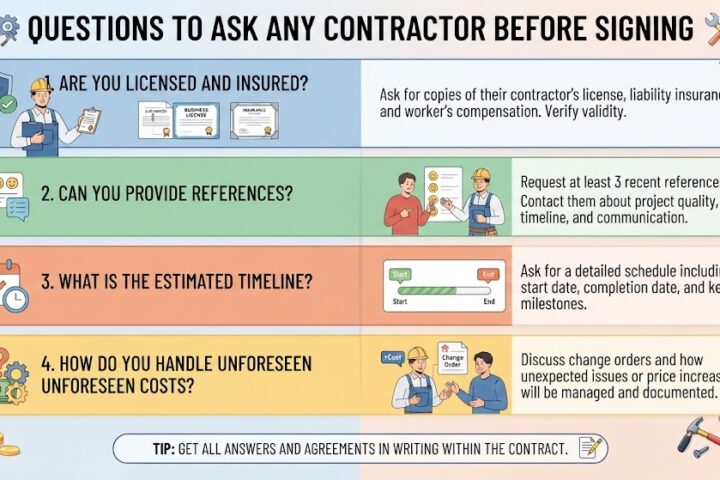
What to do: Ask how unforeseen conditions will be handled. Find out whether the quote includes any allowances for hidden damage, what types of repairs are excluded, and how additional work will be priced and approved.
Ideally, the contract should establish a written change-order process so that unexpected costs, revised work, and their effects on the schedule are documented before additional work proceeds.
6. Permits, Inspections, and Other Project Costs May Be Different
Not every remodeling estimate includes the same supporting costs. Depending on the project and local requirements, these may include permits, inspections, debris removal, delivery charges, equipment rental, site protection, and final cleanup.
A contractor who includes these expenses in the initial quote may appear more expensive than one who lists only the main construction work.
The difference may become apparent only after you begin adding up the costs that weren’t included in the lower estimate.
Permit requirements also depend on the nature of the renovation and the local jurisdiction. Cosmetic updates may be treated differently from projects involving structural changes, electrical modifications, or plumbing relocations.
What to do: Review the estimate for permits, disposal, delivery, protection of existing floors and furnishings, and cleanup. Ask which costs are included, which are excluded, and who is responsible for obtaining any required permits and arranging inspections.
When comparing prices, consider the expected total project cost rather than focusing exclusively on the headline number.
7. Communication and Project Management Have Value
A remodeling project involves dozens of decisions, from selecting materials to coordinating deliveries and resolving unexpected problems. The way a contractor communicates can make a substantial difference to your experience.
Some contractors provide detailed written updates, explain decisions before proceeding, and establish a clear process for questions and changes. Others communicate more informally, relying on phone calls or conversations at the job site.
Neither communication style alone determines workmanship. However, unclear communication can create misunderstandings about costs, schedules, responsibilities, and the finished result.
A contractor who takes the time to explain the estimate, answer questions directly, and document important decisions is helping you understand what you’re buying.
That transparency is particularly valuable when the project involves several trades or when you won’t be available to supervise the work yourself.
What to do: Ask who your main point of contact will be, how frequently you’ll receive updates, and how decisions or unexpected issues will be documented. Notice whether the contractor listens carefully to your priorities and explains unfamiliar terms without making you feel uncomfortable asking questions.
You’re not just hiring someone to complete a construction project. You’re choosing someone you’ll need to work with throughout the process.
8. Why the Cheapest Quote Isn’t Always the Best Value
When estimates differ by thousands of dollars, it’s natural to focus on the lowest number. Staying within budget matters, but the cheapest quote doesn’t automatically represent the best deal.
A lower price may reflect a more efficient construction plan, competitive material pricing, or lower overhead. It may also reflect a narrower scope, lower allowances, omitted services, or assumptions that don’t match your expectations.
Likewise, a higher quote isn’t automatically a sign of superior quality. A contractor may have included features you don’t need, specified materials beyond your budget, or simply priced the project differently.
The task is to understand the reasons behind the difference.
Imagine that one contractor includes new flooring, electrical upgrades, debris removal, and a detailed cabinet allowance, while another excludes several of these items. Comparing their totals without adjusting for those differences could lead you to choose a proposal that ultimately costs more.
What to do: Compare the scope, specifications, allowances, exclusions, schedule, and payment terms before making a decision. If a price seems unusually low or high, ask the contractor to explain the major cost drivers.
A fair comparison considers the cost of delivering the same result—not just the amount printed at the bottom of each page.
How to Compare Remodeling Quotes Fairly
You don’t need to be a construction expert to evaluate competing estimates. You need a consistent way to identify what each contractor is offering.
Use the following steps before making your decision.
-
Put the estimates side by side. Compare each major category of work, including demolition, materials, installation, plumbing, electrical work, and finishing.
-
Identify what’s included and excluded. Mark missing items, optional upgrades, owner-supplied materials, and work that may generate additional charges.
-
Compare material specifications. Check whether the contractors have priced equivalent products, finishes, quantities, and installation requirements.
-
Clarify allowances and unknowns. Find out which costs are fixed, which are estimated, and which could change after demolition or material selection.
-
Ask about scheduling and project management. Understand the anticipated start date, duration, supervision arrangements, and process for handling delays.
-
Review the contract and payment terms. Confirm the payment schedule, warranty provisions, change-order process, and responsibilities for permits and inspections.
-
Ask each contractor to explain significant differences. Give them an opportunity to clarify their assumptions rather than immediately dismissing a quote because it is higher or lower.
-
Consider the working relationship. Evaluate responsiveness, clarity, references, relevant experience, and whether you feel comfortable trusting the contractor with your home.
Where possible, ask for revisions to the written estimates so that you’re comparing updated proposals on a consistent basis.
The Best Quote Is the One You Understand
Two remodeling quotes can differ substantially because contractors make different decisions about materials, labor, scheduling, project scope, and the risks associated with existing conditions.
The price matters, but it tells only part of the story. A useful estimate should help you understand what work will be performed, what materials will be used, what isn’t included, and how changes will be handled.
A good contractor should be able to explain those details in plain language and answer reasonable questions without making you feel pressured to sign.
Take the time to compare the complete proposals, resolve uncertainties, and make sure the final agreement reflects your expectations. The more you understand before construction begins, the better prepared you’ll be to manage your budget and avoid preventable surprises.
Looking at a single estimate? Read our guide on [how to read a remodeling quote] to understand the line items, allowances, exclusions, and details worth checking before you sign.

Comments
0 commentsNo comments yet. Be the first to share your experience.