
Questions to Ask a Remodeling Contractor Before Hiring
Hiring a remodeling contractor is about more than comparing prices. You are choosing someone who will spend days or even weeks working inside your home, managing materials, coordinating schedules, and making decisions that can affect the quality of the finished project.
The right contractor can make the remodeling process feel organized and predictable. The wrong one can leave you dealing with delays, unexpected costs, poor workmanship, or communication problems that could have been avoided.
Before signing a contract, take the time to ask a few essential questions. A good conversation upfront helps you understand how the contractor works, what you can expect, and whether the partnership feels right for your home.
Please note: This article provides general information. Licensing, insurance, permit, and contract requirements vary by location. Check with your local building department or relevant licensing authority to confirm the rules that apply to your project.
Questions About the Contractor’s Experience and Credentials
Start by learning who you are hiring and whether they have the experience your project requires. A contractor who specializes in bathroom renovations, for example, may not be the best fit for a major structural remodel.
Ask questions such as:
-
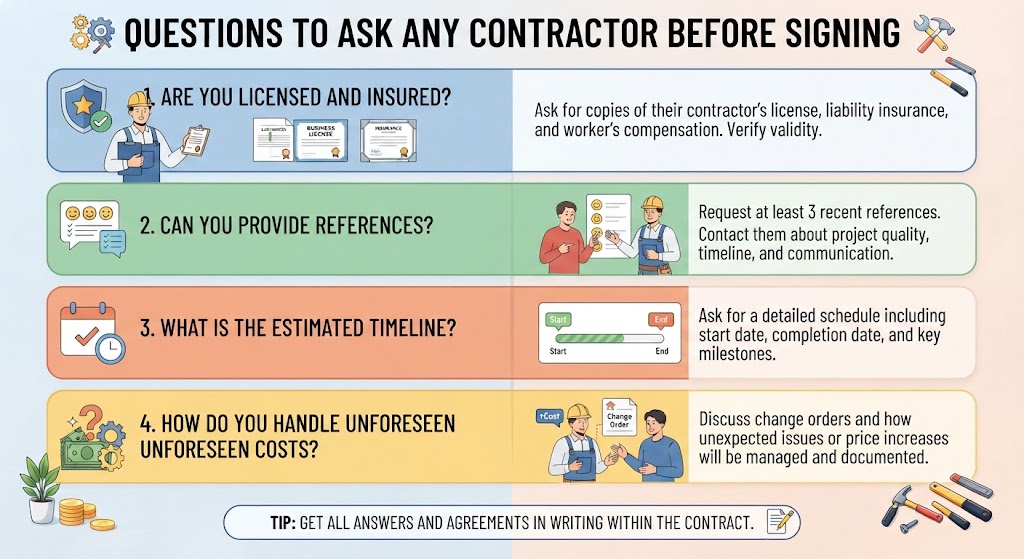
How long have you been doing this type of work? Look for experience relevant to your specific project, not just general construction experience.
-
Are you licensed or registered where required? Ask for the relevant details and verify them with the appropriate local authority.
-
Can you provide proof of insurance? Depending on the project and local requirements, this may include general liability insurance and workers’ compensation coverage.
-
Can I speak with recent customers? References can help you understand the contractor’s reliability, workmanship, and communication style.
-
Can I see examples of completed projects? Photos and, where possible, visits to completed jobs can give you a better sense of their standards.
Pay attention to how the contractor responds. Someone who readily explains their qualifications and provides verifiable information makes it easier to establish trust.
Questions About the Scope of Work
Before work begins, both parties should have a clear understanding of what the project includes. Misunderstandings about materials, labor, or responsibilities can lead to disagreements once construction is underway.
Ask the contractor to explain exactly what is included in the estimate and what falls outside it.
For example, does a kitchen remodel include removing the old cabinets, installing new countertops, updating plumbing connections, and repairing the walls afterward? Are fixtures, disposal fees, and finishing work included in the price?
You should also ask:
-
Who will supervise the project each day? Know who is responsible for coordinating the work and making day-to-day decisions.
-
Will you use subcontractors? If so, ask which parts of the project they will handle and who will oversee their work.
-
How will you protect the rest of my home? Discuss dust barriers, floor protection, furniture covering, and access to unaffected areas.
-
What materials and products will you use? Confirm specifications, brands, finishes, and any agreed alternatives in writing.
A detailed scope of work gives everyone a shared reference point. It also makes it easier to compare estimates from different contractors because you can see whether they are pricing the same work.
Questions About the Schedule and Timeline
A remodeling project can disrupt your daily routine, particularly when a kitchen, bathroom, or major living area is out of use. Understanding the schedule before construction starts helps you prepare.
Ask when the contractor expects to begin, how long the work should take, and what milestones will mark progress.
It is also worth discussing the possibility of delays. Materials may arrive late, inspections may need to be rescheduled, or hidden problems may be discovered after demolition.
A reliable contractor should be able to explain the main risks and how they will communicate changes to the schedule.
Other useful questions include:
-
What working hours should I expect?
-
Will the crew be on-site every working day?
-
How much notice will I receive if the schedule changes?
-
Will any parts of the house be inaccessible during construction?
-
What needs to happen before the project can be considered complete?
No contractor can guarantee that every project will proceed exactly as planned. What matters is having a realistic schedule and a clear process for handling changes.
Questions About Permits, Inspections, and the Contract
Paperwork may not be the most exciting part of remodeling, but it is essential for protecting both you and the contractor.
Depending on the scope of work and your location, permits or inspections may be required for structural changes, electrical work, plumbing, and other alterations. Confirm which approvals are necessary before construction begins.
Ask who will obtain the permits, schedule inspections, and provide documentation. Make sure these responsibilities are clearly assigned rather than assumed.
Before signing the agreement, confirm that it includes:
-
A detailed description of the work and materials.
-
The total price and an explanation of what is excluded.
-
The anticipated start date and project duration.
-
The payment schedule and applicable conditions.
-
Procedures for approving changes and additional costs.
-
Relevant warranty information and responsibilities for correcting defects.
Read the agreement carefully and ask for clarification whenever something is unclear. Important promises made during conversations should be reflected in the written contract.
Questions About Costs and Payments
The lowest estimate is not automatically the best value. A contractor may quote less because certain tasks, materials, or finishing details have been excluded. Another estimate may appear higher because it covers more of the work.
Ask how the price was calculated and whether the estimate is fixed, provisional, or subject to adjustments under specified circumstances.
You should also understand when payments are due and what progress or completed work triggers each payment. The schedule should be clearly documented in the agreement and comply with applicable local requirements.
Discuss how changes will be priced and approved before any additional work begins. If you decide to upgrade a countertop or change a fixture midway through the project, you should understand the cost and schedule implications before agreeing.
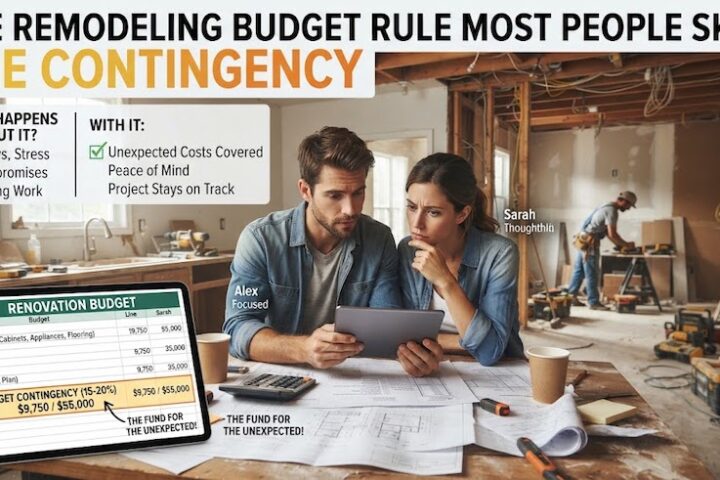
Finally, ask how unexpected problems will be handled. Demolition can reveal damaged framing, outdated wiring, plumbing leaks, or moisture issues that were not visible during the initial inspection.
A dependable contractor should explain how these discoveries will be documented, priced, and approved. Avoid relying on vague verbal assurances when additional costs are involved.
Questions About Warranties and Aftercare
The relationship should not end the moment the crew leaves and the tools are packed away. You need to know what happens if a problem appears after the work is completed.
Ask what warranty covers the contractor’s workmanship and whether manufacturers provide separate warranties for installed products and materials.
Find out how to report a defect, who will assess the problem, and what response time you can reasonably expect. Make sure warranty terms and any exclusions are documented.
You should also discuss the final cleanup. Will construction debris be removed? Will protective coverings be taken away? Will the contractor walk through the completed project with you and identify any outstanding items?
Before making the final payment, follow the payment terms in your contract and confirm that agreed work has been completed. If there are unfinished items, document them and establish a written plan for resolving them.
Questions About Communication
Good communication can make a substantial difference to your remodeling experience. Even a well-managed project can involve unexpected decisions, and you need to know how those decisions will be discussed.
Ask who your main point of contact will be, how you should reach them, and how quickly you can generally expect a response.
It is also useful to establish how often you will receive progress updates. Some homeowners prefer a brief daily check-in, while others are comfortable with scheduled updates at important milestones.
Discuss how urgent issues will be communicated and who has the authority to approve changes. Clear expectations reduce confusion and help prevent small problems from becoming larger disagreements.
Most importantly, notice whether the contractor listens carefully to your concerns. Communication is a two-way process, and you should feel comfortable raising questions throughout the project.
Pay Attention to How They Answer
The questions themselves are important, but the contractor’s attitude and behavior can tell you just as much.
A professional contractor should be willing to explain the process, discuss potential problems, provide documentation, and clarify anything you do not understand. You do not need to know every construction term to make an informed decision.
Be cautious if someone pressures you to sign immediately, refuses to put important promises in writing, avoids questions about insurance, or gives unusually vague answers about costs and timing.
One uncomfortable conversation does not automatically mean a contractor is unsuitable, but repeated evasiveness deserves attention. Trust should be based on verifiable information, clear expectations, and consistent communication rather than confidence alone.
Make Your Decision Before the Work Begins
Choosing a remodeling contractor is easier when you compare more than the final price. Evaluate experience, references, the scope of work, the proposed schedule, contract terms, and the contractor’s willingness to communicate openly.
Take notes during each conversation and ask the same core questions of every candidate. This will help you compare their answers fairly and identify differences that might otherwise be overlooked.
Once you have selected a contractor, make sure the important details are documented before work begins. A clear agreement gives both parties a shared understanding of responsibilities, costs, and expectations.
The goal is not to find someone who promises a perfect project. It is to find a qualified professional who approaches the work carefully, communicates honestly, and has a clear plan for dealing with problems when they arise.
For another important part of the hiring process, read our guide on why two remodeling quotes can look so different. Understanding what each estimate includes will help you compare contractors more confidently and make a better-informed decision.
Comments
0 commentsNo comments yet. Be the first to share your experience.