
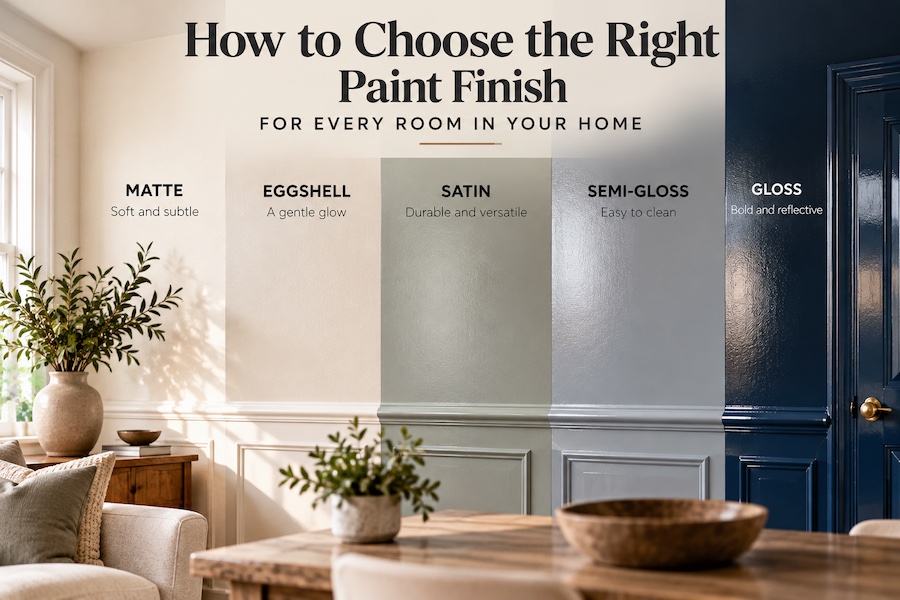
How to Choose the Right Paint Finish for Every Room in Your Home
Choosing a paint color is the fun part. You find the perfect shade, imagine how it will look on your walls, and start picturing the finished room. Then comes another question: Should you choose matte, eggshell, satin, semi-gloss, or gloss?
Suddenly, a simple decorating decision becomes a little more complicated.
The good news is that choosing a paint finish doesn’t have to be difficult. The right finish can make a room feel softer, help walls stand up to everyday wear, and make cleaning easier. It can also change how a paint color looks under natural and artificial light.
The trick is to consider two things together: the atmosphere you want to create and the way you actually use the room.
What Does a Paint Finish Do?
A paint finish, sometimes called a sheen, describes how much light a painted surface reflects. The amount of reflection affects both the appearance of the paint and how it performs in everyday life.
Low-sheen finishes reflect less light, creating a soft, understated appearance. They can help disguise small surface imperfections, making them popular for walls and ceilings that need a smooth, relaxed look.
Higher-sheen finishes reflect more light and tend to be easier to wipe clean. They can also emphasize surface imperfections, particularly when applied to walls that aren’t perfectly smooth.
Neither option is automatically better. A glossy finish may be practical for a frequently touched door, while a matte finish may be more attractive on a large living room wall.
The best paint finish is the one that balances appearance, durability, and maintenance for the surface you’re painting.
Understanding the Different Types of Paint Finishes
Paint finishes are generally arranged from the least reflective to the most reflective. Exact sheen levels vary by manufacturer, so it’s worth checking the product specifications when comparing paints.
1. Flat and Matte: A Soft, Understated Look
Flat and matte paints have little to no noticeable shine. They create a smooth, subdued appearance that works especially well in rooms where you want the walls to feel like a quiet background rather than a decorative feature.
These finishes are popular for ceilings, bedrooms, living rooms, and other spaces where a soft visual effect matters more than frequent scrubbing.
One of their biggest advantages is their ability to disguise minor surface irregularities. On an older wall, a low-sheen finish may look more forgiving than a glossy alternative.
The trade-off is that some flat paints can mark or become difficult to clean when exposed to frequent rubbing. Modern washable matte paints are available, but their performance depends on the particular product.
Best for: Ceilings, low-traffic rooms, and walls where a soft, elegant appearance is the priority.
2. Eggshell: A Subtle Glow for Everyday Living
Eggshell has a slight sheen, traditionally compared with the surface of an eggshell. It offers a middle ground between the flat appearance of matte paint and the more noticeable reflection of satin.
This makes it a popular option for living rooms, bedrooms, dining rooms, and other everyday spaces.
Eggshell can give walls a little more definition without making them look shiny. It may also offer better resistance to routine cleaning than some flat paints, depending on the product.
It’s a particularly useful choice when you want a room to feel finished and polished without drawing attention to every small imperfection in the walls.
Best for: Living rooms, bedrooms, dining rooms, and moderate-traffic areas.
3. Satin: A Practical Choice for Busy Rooms
Satin has a noticeable but relatively soft sheen. It reflects more light than eggshell and is often chosen for areas that need regular cleaning.
Kitchens, hallways, laundry rooms, and family spaces can all benefit from a finish that handles everyday contact.
Satin is also a common option for children’s rooms, where fingerprints, marks, and accidental spills may be more frequent. However, a washable eggshell or matte product may also work well, depending on the manufacturer’s specifications.
One thing to keep in mind: satin can reveal wall imperfections more readily than lower-sheen finishes. Proper preparation becomes especially important when painting over patched areas or uneven surfaces.
Best for: Busy family rooms, hallways, kitchens, and other areas where cleanability matters.
4. Semi-Gloss: Durable and Easy to Wipe Clean
Semi-gloss reflects considerably more light than matte, eggshell, or satin. Its brighter appearance gives architectural details a distinct outline, which is one reason it’s commonly used on trim, doors, and selected cabinetry.
Its relatively smooth finish is also useful on surfaces that need frequent wiping.
Semi-gloss can work well in bathrooms and other areas exposed to moisture, provided the paint is designed for the application and the underlying surface is properly prepared. Ventilation remains essential, especially in rooms where steam builds up.
Because semi-gloss reflects more light, it can emphasize dents, brush marks, and uneven surfaces. Sanding, cleaning, and priming are important steps when aiming for a professional-looking result.
Best for: Baseboards, door frames, doors, and suitable trim or cabinetry.
5. Gloss and High-Gloss: A Bold Design Statement
Gloss finishes deliver a strong reflective effect. Used thoughtfully, they can make a painted feature feel striking, polished, and deliberately decorative.
High-gloss paint is often used on statement furniture, selected cabinetry, decorative trim, and other surfaces where a dramatic finish is part of the design.
The challenge is preparation. Gloss reflects light so clearly that imperfections become much more visible. Uneven sanding, small dents, and application marks can stand out.
For this reason, high-gloss finishes generally require careful surface preparation and a suitable application technique.
Best for: Statement pieces, selected cabinets, decorative details, and carefully prepared trim.
Which Paint Finish Should You Use in Each Room?
Choosing by finish type is helpful, but thinking about the room itself makes the decision easier. Consider how often the surface gets touched, whether it encounters moisture, and how much visual attention you want the walls to attract.
Living Rooms
Living rooms benefit from finishes that complement the lighting, furniture, and overall mood. Matte or eggshell can create a relaxed appearance, especially across large wall surfaces.
If the room receives a lot of use, consider a washable product rather than choosing solely by sheen.
Bedrooms
Bedrooms usually benefit from a soft, comfortable atmosphere. Matte and eggshell are popular choices because they create a subtle wall finish without much reflection.
For children’s bedrooms or guest rooms that need more frequent cleaning, a durable washable paint may be worth considering.
Kitchens
Kitchen walls encounter cooking splashes, fingerprints, and regular cleaning. Satin is a common choice because it balances appearance with practicality.
The best option depends on the wall’s location. A surface behind a cooking area may require a different level of protection from a wall that sees little direct contact. Always follow the paint manufacturer’s recommendations for the intended surface.
Bathrooms
Bathrooms need more than the right paint sheen. Humidity, condensation, surface preparation, and ventilation all affect how well paint performs.
Satin and semi-gloss are common choices for bathroom walls and trim, but suitable washable matte and eggshell products are also available. Look for paint specifically recommended for bathrooms or humid environments.
A properly functioning exhaust fan is particularly important. Paint alone cannot solve a moisture problem caused by poor ventilation.
Hallways and Entryways
Hallways and entryways are exposed to bags, coats, hands, furniture, and everyday traffic. Satin is a practical option when durability and cleaning are priorities.
A quality washable eggshell paint may also work well, particularly if you prefer less reflection on large walls.
Ceilings
Flat or matte paint is a traditional ceiling choice because it minimizes glare and helps the ceiling remain visually unobtrusive.
This is particularly useful in rooms with strong natural light or overhead lighting that might reveal surface imperfections.
Doors, Trim, and Baseboards
Semi-gloss is a common choice for doors, trim, and baseboards because it provides a defined appearance and is generally easy to wipe clean.
Gloss can create a more dramatic effect, while satin may offer a softer transition between the trim and surrounding walls.
The best choice depends on the architectural style of the room and the amount of contrast you want.
How Lighting Changes the Appearance of Paint
A paint color doesn’t look exactly the same in every room, and sheen adds another variable.
Natural daylight changes throughout the day. Morning light may make a color feel cooler or softer, while warm afternoon sunlight can bring out yellow, beige, or red undertones.
Artificial lighting also matters. Warm bulbs and cool-white LEDs can make the same wall color appear noticeably different.
Sheen influences how this light is reflected. Matte finishes tend to produce a more diffuse appearance, while satin and glossier paints create stronger highlights.
Before painting an entire room, test your chosen color and finish on a sample area. Observe it in the morning, afternoon, and evening, with the lights on and off.
If you’re comparing finishes, use the same color from the same product line when possible. This helps you see how sheen, rather than a difference in color formulation, affects the result.
A Simple Design Trick: Mix Finishes in the Same Color
You don’t need several different paint colors to give a room visual depth. Sometimes, using different finishes in the same color is enough.
For example, imagine warm white walls in eggshell paired with semi-gloss trim in the same shade. The color remains consistent, but the difference in reflection gives the architectural details a subtle outline.
The same approach can work with darker colors. Deep green walls with slightly glossier trim can create a restrained, sophisticated effect without introducing additional colors.
This technique is especially effective when the room already has interesting architectural details, such as paneling, moldings, built-in shelves, or decorative doors.
The key is restraint. A subtle difference in sheen often creates a more cohesive result than introducing too many competing finishes.
Common Paint Finish Mistakes to Avoid
Even a good paint color can disappoint when the finish isn’t suited to the room or the surface.
Choosing gloss for an imperfect wall: More reflective paint can emphasize dents, uneven patches, and application marks. Repair and prepare the wall before using a higher-sheen finish.
Assuming every satin paint is equally washable: Durability varies by formulation. Check the product’s cleaning and abrasion-resistance claims rather than relying on the finish name alone.
Ignoring moisture problems: Bathroom paint won’t prevent mold or peeling if leaks, condensation, or poor ventilation remain unresolved.
Skipping surface preparation: Dirt, grease, loose paint, and poorly sanded repairs can affect the final result. Cleaning, repairing, and priming where necessary are important parts of the process.
Testing color without testing sheen: A color may look different when applied in a glossier finish. Test the actual product you intend to use.
Forgetting about touch-ups: Some finishes show touch-up areas more clearly than others. Keep a record of the paint brand, color, product line, and finish for future repairs.
How to Choose the Right Finish Before You Buy
Before heading to the paint store, think through three simple questions.
First, how much wear will the surface receive? A quiet guest bedroom and a busy hallway have different demands.
Second, what appearance do you want? If you prefer a soft, understated look, start with matte or eggshell. If you want more definition and easier cleaning, consider satin or semi-gloss where appropriate.
Third, what does the manufacturer recommend? Paint formulations vary, and the best finish for a particular wall or trim surface depends on the product and the conditions it will face.
If you’re unsure, ask the paint supplier to compare suitable products for your specific room. A small sample can help you make a more confident decision before buying enough paint for the entire project.
The Bottom Line
Choosing a paint finish doesn’t have to be complicated. Matte and flat finishes create a soft appearance, eggshell offers a subtle glow, satin balances sheen with everyday practicality, and semi-gloss or gloss brings more reflection and definition to selected surfaces.
The most important thing is to match the finish to the room, the condition of the surface, and the amount of cleaning it will need.
Take time to test your paint, pay attention to lighting, and follow the manufacturer’s guidance. A little planning can help you achieve a finish that looks good not just on the day you paint, but throughout everyday life in your home.


Comments
0 commentsNo comments yet. Be the first to share your experience.