
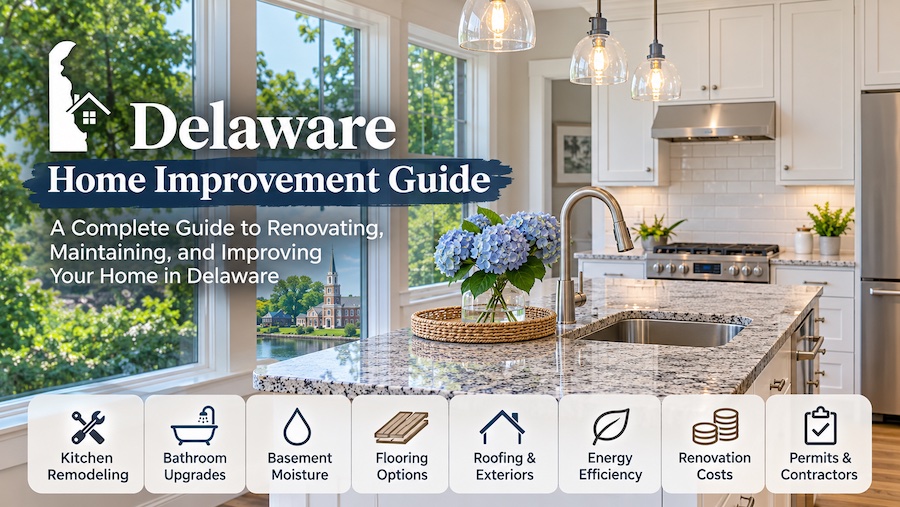
Delaware Home Improvement Guide: A Complete Guide to Renovating, Maintaining, and Improving Your Home
Owning a home in Delaware comes with its own set of opportunities and challenges. From historic properties in Wilmington to suburban homes in Newark, Hockessin, and Middletown, every property has different maintenance needs, renovation priorities, and design possibilities.
Whether you are planning a kitchen renovation, upgrading your bathroom, replacing old windows, installing new countertops, or simply trying to keep your property in good condition, understanding the fundamentals of home improvement can help you make better decisions.
This guide brings together essential information for Delaware homeowners, covering renovation planning, materials, costs, home maintenance, and practical ways to improve your living space.
1. Understanding Delaware Homes and Their Renovation Needs
Delaware has a diverse housing landscape. Homeowners can find historic brick houses, traditional colonial-style properties, suburban developments, townhouses, and newer residential communities.
Each type of property requires a different approach to renovation.
Older homes may need improvements to plumbing, electrical systems, insulation, roofing, and windows. Newer properties may benefit more from kitchen upgrades, bathroom remodeling, flooring improvements, and energy-efficient features.
Delaware’s climate also plays an important role. Hot, humid summers, cold winters, seasonal rainfall, and coastal weather conditions can affect building materials and long-term maintenance.
Before starting any major project, consider the age of your home, its existing condition, local climate conditions, and your long-term plans for the property.
2. Kitchen Remodeling in Delaware
The kitchen is one of the most frequently used spaces in a home. It is also one of the areas where thoughtful improvements can make a noticeable difference in everyday living.
A kitchen renovation may include:
- Replacing cabinets and cabinet hardware
- Installing new countertops
- Updating backsplashes
- Improving lighting
- Replacing outdated appliances
- Upgrading sinks and faucets
- Improving storage and workspace organization
When planning a kitchen renovation, start with functionality rather than appearance alone.
Think about how you use the kitchen, how much storage you need, and whether the existing layout works for your household.
Choosing the Right Countertop Material
Countertops are among the most visible and frequently used kitchen surfaces. Common options include granite, quartz, marble, and laminate.
Granite offers natural patterns and a distinctive appearance. Quartz provides a consistent design and a nonporous surface. Marble is appreciated for its natural elegance but requires more careful maintenance. Laminate is generally a more budget-friendly option.
The best choice depends on your budget, design preferences, maintenance expectations, and daily kitchen use.
3. Bathroom Remodeling and Upgrades
Bathroom renovations can improve comfort, functionality, and the overall appearance of a home.
Some homeowners choose a complete bathroom transformation, while others focus on smaller improvements such as replacing fixtures, installing new flooring, updating vanities, or improving ventilation.
Important considerations include:
- Proper waterproofing
- Effective ventilation
- Moisture-resistant materials
- Efficient plumbing fixtures
- Durable flooring
- Adequate lighting and storage
In Delaware, moisture management deserves particular attention. Poor ventilation and inadequate waterproofing can contribute to mold growth, damaged surfaces, and expensive repairs.
Address underlying moisture problems before installing new finishes.
4. Basement Moisture and Water Management
Basements are common in many Delaware homes, but they can also present maintenance challenges.
Water intrusion, condensation, poor drainage, and foundation-related issues can affect basement spaces.
Common warning signs include:
- Persistent musty odors
- Water stains on basement walls
- Damp floors
- Peeling paint
- Visible mold
- Water entering after heavy rainfall
The source of moisture should be identified before selecting a repair solution.
Possible improvements include repairing gutters, extending downspouts, correcting grading around the foundation, improving drainage, sealing appropriate foundation areas, and installing professional waterproofing systems when necessary.
Simply covering a damp wall with paint or decorative panels does not solve the underlying problem.
5. Flooring Options for Delaware Homes
Flooring affects both the appearance and functionality of a home.
Popular flooring materials include:
- Hardwood
- Luxury vinyl plank (LVP)
- Porcelain and ceramic tile
- Laminate
- Engineered wood
Hardwood provides a traditional appearance and can be refinished, depending on its construction and condition.
Luxury vinyl plank is popular for its durability and resistance to everyday moisture exposure. Porcelain tile works particularly well in bathrooms, laundry rooms, and other areas where water resistance is important.
When selecting flooring, consider the room’s moisture conditions, expected foot traffic, maintenance requirements, and installation costs.
6. Roofing, Windows, and Exterior Maintenance
A home’s exterior protects everything inside it. Regular inspections can help identify problems before they develop into expensive repairs.
Delaware homeowners should pay attention to:
Roofing: Look for missing or damaged shingles, deteriorating flashing, leaks, and signs of water intrusion in the attic.
Windows: Check for drafts, damaged seals, condensation between glass panes, and difficulty opening or closing windows.
Siding: Inspect for cracks, loose panels, water damage, and areas where moisture may enter.
Gutters: Keep gutters clear and make sure downspouts direct water away from the foundation.
Exterior paint: Peeling or damaged paint can expose certain building materials to moisture and deterioration.
Seasonal inspections are particularly useful before winter and after periods of severe weather.
7. Improving Energy Efficiency
Energy efficiency is an important consideration for Delaware homeowners because heating and cooling demands change throughout the year.
Some improvements can reduce energy waste and improve indoor comfort.
Consider:
- Adding insulation where needed
- Sealing air leaks around windows and doors
- Improving attic insulation
- Maintaining heating and cooling systems
- Installing programmable or smart thermostats
- Replacing inefficient lighting
- Evaluating older windows and exterior doors
Before replacing major equipment, consider a professional energy assessment. It can help identify which improvements are likely to provide the greatest benefit.
8. How Much Does Home Renovation Cost in Delaware?
Renovation costs vary considerably depending on the property’s condition, project size, materials, labor, and location.
A small cosmetic upgrade will have a very different budget from a complete kitchen renovation or a major structural repair.
When preparing a renovation budget, account for:
- Materials and product selections
- Contractor labor
- Demolition and disposal
- Plumbing and electrical work
- Permits and inspections
- Unexpected repairs
- Contingency funds
Request multiple written estimates for major projects. Make sure each contractor is quoting comparable materials, labor, and project specifications.
Avoid choosing a contractor based on price alone. Experience, references, insurance, communication, and a clearly defined scope of work are also important.
9. Permits and Local Building Requirements
Home improvement requirements can vary depending on the municipality and the nature of the project.
Some cosmetic updates may not require a building permit, while structural modifications, electrical work, plumbing changes, and certain additions may require approvals and inspections.
Before starting work, contact the appropriate local building department.
Homeowners in Wilmington, Newark, Dover, Middletown, and unincorporated areas should not assume that the same requirements apply everywhere.
For official information, consult the relevant local government:
- Delaware state government: https://delaware.gov/
- City of Wilmington: https://www.wilmingtonde.gov/
- City of Newark: https://newarkde.gov/
- City of Dover: https://www.cityofdover.com/
Always verify current requirements before beginning a project.
10. How to Choose a Home Improvement Contractor in Delaware
Finding a reliable contractor is one of the most important steps in any renovation project.
Before hiring a professional:
- Check their business registration and applicable licensing requirements.
- Ask for proof of insurance.
- Review previous projects and references.
- Request a detailed written estimate.
- Confirm the project timeline.
- Understand payment terms.
- Clarify who will obtain necessary permits.
- Make sure changes to the original scope are documented in writing.
A good contractor should be able to explain the work clearly, answer questions, and provide realistic expectations.
11. Planning Your Home Improvement Projects
Successful renovations begin with a realistic plan.
Instead of trying to upgrade everything at once, prioritize projects according to urgency, budget, and long-term value.
A practical order might look like this:
First: Address essential repairs. Fix roof leaks, water intrusion, electrical concerns, plumbing problems, and structural issues.
Second: Improve efficiency and protection. Consider insulation, windows, ventilation, and drainage.
Third: Upgrade functional spaces. Renovate kitchens, bathrooms, flooring, and storage areas.
Fourth: Focus on appearance. Consider paint, lighting, decorative finishes, and landscaping.
This approach helps homeowners avoid spending money on cosmetic improvements while important underlying problems remain unresolved.
Final Thoughts
Improving a home in Delaware is not just about choosing attractive materials or following the latest design trends. It is about understanding your property’s needs, planning carefully, selecting suitable materials, and investing in improvements that make everyday living better.
Whether you own a historic home in Wilmington, a suburban property in Newark, or a newer house in Middletown, informed decisions can help protect your investment and create a more comfortable living environment.
HouseLogbook brings together practical home improvement information, material comparisons, renovation ideas, and homeowner resources to help you make those decisions with confidence.
Explore more guides on HouseLogbook for ideas, planning advice, and practical solutions for your next home project.



Comments
0 commentsNo comments yet. Be the first to share your experience.